

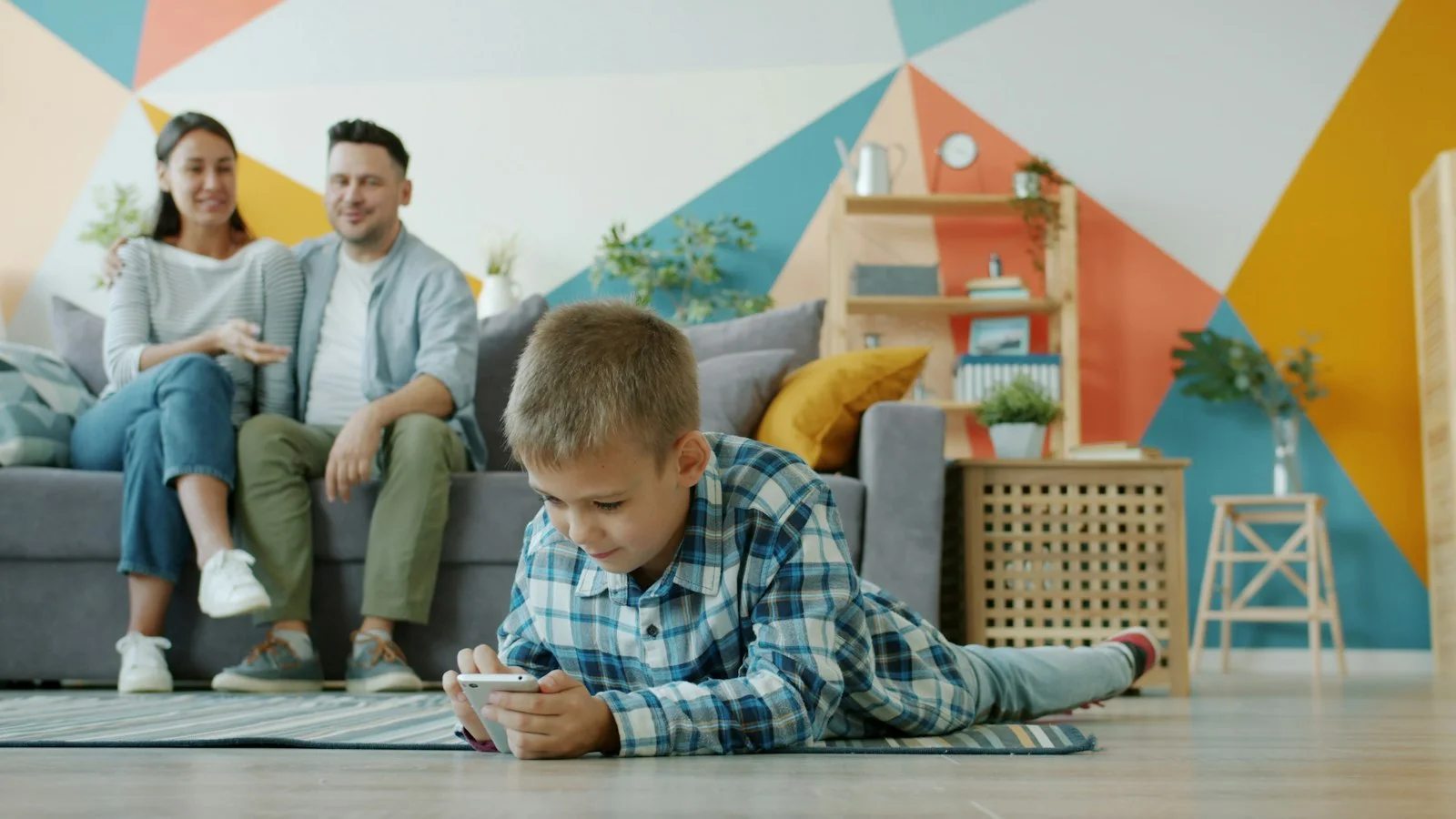
For a decade, “two hours a day” was the number every parent had memorized. It came from the American Academy of Pediatrics’ 2016 media guidelines, and it made screen time sound like a math problem: add up the minutes, stop at 120. In early 2026, the AAP quietly retired that number. There is no longer a single hour limit the organization recommends for any age group above toddlerhood. If that sounds like permission to stop worrying, it isn’t — it’s an admission that counting minutes was never actually protecting kids.
Why the old rule stopped working
The two-hour guideline was built on research about television, at a time when watching TV was the only kind of “screen time” that existed. A show a child watched passively in the living room and a video call with a grandparent living three states away were treated as identical. Today, screens are stitched into everyday life in ways the 2016 guidance never anticipated: they’re required for homework, embedded in restaurant menus, handed out on school-issued devices, and unavoidable in most public places. Pediatricians involved in the update have pointed out that a hard cutoff had become close to impossible for most families to actually follow — and advice nobody can follow tends to just get ignored.
What the AAP focuses on instead
What’s actually on the screen
Ten minutes of a fast-cut, violent video game is not the same as ten minutes of a video call or an interactive reading app. The AAP now points parents toward tools like Common Sense Media to judge whether content is age-appropriate and paced in a way kids can actually follow, rather than assuming all screen time is interchangeable.
A family media plan, decided together
Instead of a rule handed down from a pediatrician’s office, the AAP recommends families build their own written media plan: where devices live, when they’re off-limits, and what “screen time” even includes in that household. A plan the whole family had a hand in tends to hold up better than a rule imposed from outside, and it can flex as kids get older.
Asking why, before asking how much
A child who reaches for a tablet the moment they’re bored, upset, or left alone is telling you something. The updated guidance encourages parents to look at what’s underneath heavy screen use — loneliness, anxiety, undiagnosed ADHD, or a lack of other things to do — rather than treating the screen itself as the whole problem. Sometimes the more useful fix is a new after-school activity, not a stricter timer.
Protecting sleep, no exceptions
This is the one place the AAP still draws a hard line. Screens in the bedroom and in the hour before sleep are strongly discouraged at every age, because stimulating content and blue light reliably interfere with falling and staying asleep — and poor sleep affects mood, attention, and learning far more than an extra twenty minutes of video ever will.
What still holds true by age
Even without a strict number, the research on very young brains hasn’t changed, and some patterns are still worth knowing.
- Under 18 months: Babies and young toddlers learn language, motor skills, and social cues from real faces and real voices, not screens. Video chatting with a relative is fine; solo screen time generally isn’t recommended at this age.
- 18 months to 5 years: Co-viewing matters more than the clock. Sitting with your child while they watch something, talking about what’s happening, and choosing slower-paced, high-quality content does more for their development than restricting minutes alone. Screens still shouldn’t crowd out the free play, reading, and outdoor time that build core skills at this age.
- School age (6–12): This is where habits get set. Watch for signs screens are displacing sleep, physical activity, homework, or in-person friendships — those trade-offs matter more than the total hours logged.
- Teens (13–18): The concern shifts from how much to how the platform is designed. Algorithm-driven feeds are built to be hard to stop scrolling, and can expose teens to content around self-harm, disordered eating, or harassment. Ongoing, judgment-free conversations about what they’re seeing online tend to work better than surveillance alone.
A realistic starting point this week
- Pick one screen-free window every day — dinner, the first 30 minutes after school, or the hour before bed — and hold it for everyone in the house, adults included.
- Move charging stations out of bedrooms.
- Watch or play alongside your child once this week, even for ten minutes, and ask what they like about it.
- Notice what the device is replacing. If it’s boredom, that’s fine. If it’s sleep, outdoor time, or friendships, that’s the actual thing to address.
The goal was never a perfect number. It’s a household where screens are one part of a full life, not the default answer to every quiet moment.